
When a Greeting Becomes a Test of Belonging
Jul 20, 2026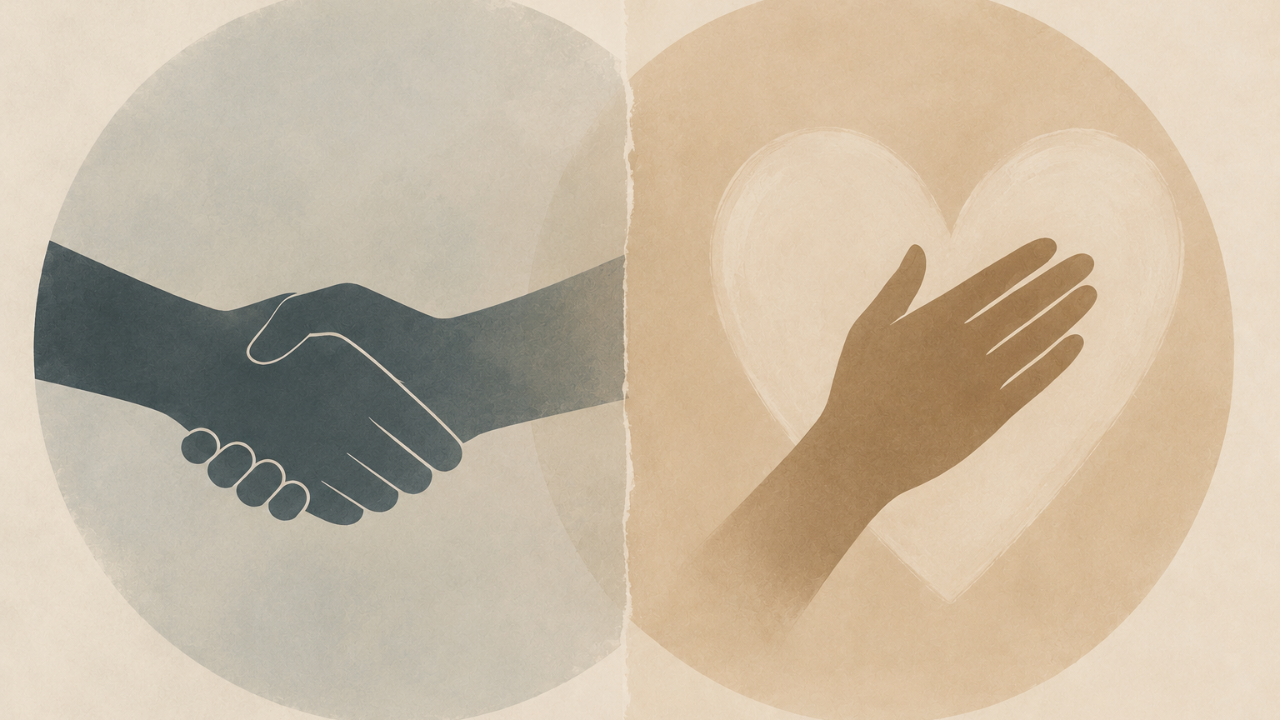
When a small gesture becomes symbolic
For a while, there was a debate in Norway about handshaking.
More specifically, about what happens when someone chooses not to shake hands.
On the surface, it may seem like a small thing. A greeting. A brief moment between two people.
But sometimes small gestures become bigger than themselves.
They become symbols of respect, values, belonging, and whether someone is seen as “integrated enough” or “Norwegian enough.”
And that is where I think we need to pause.
Because a handshake is not just a handshake when it becomes a test of identity.
When norms meet difference
In Norway, shaking hands is often understood as a respectful way to greet someone. It is familiar, expected, and for many people, it represents politeness and mutual recognition.
I understand that.
But what happens when someone greets differently?
What happens when a person chooses not to shake hands because of religion, culture, personal boundaries, hygiene, discomfort, or simply another way of showing respect?
Do we become curious?
Or do we immediately interpret it as rejection?
This is where cultural humility becomes important.
Not because it asks us to agree with everything, but because it asks us to slow down before we judge.
What does this gesture mean to me?
What might it mean to the other person?
And why do I assume my way of showing respect is the only valid one?
From greeting to belonging
What concerned me most about the debate was how quickly it moved from one concrete situation to a much bigger question:
Does this person belong here?
Suddenly, the issue was no longer only about a greeting. It became about whether someone respected Norwegian society, had accepted Norwegian values, or was “integrated enough.”
That shift matters.
Because when one gesture becomes the measure of a person’s entire identity, we risk reducing people to symbols.
We also risk repeating an old pattern: the idea that belonging requires sameness.
That to be accepted, you must not only participate in society, but become as similar as possible to the majority.
But belonging should not require people to give up every visible part of who they are.
Who defines respect?
A diverse society will always include moments where norms meet difference. Sometimes those moments feel uncomfortable. Sometimes they create uncertainty.
The question is what we do with that discomfort.
Do we use it to decide who belongs?
Or do we use it as an opportunity to understand each other better?
There is also a question of power here.
Who gets to define what a respectful greeting looks like?
Why is a handshake understood as neutral, while placing a hand over the heart may be seen as difficult, political, or “other”?
What we call “normal” is often shaped by the majority. And when the majority’s habits are treated as neutral, other people’s habits can easily be seen as a problem.
Belonging without sameness
Of course, greetings happen between people. A person expecting a handshake may feel rejected. A person who does not want to shake hands may feel pressured if their boundary is not respected.
Both things can be true.
But if we want to live well together in diverse societies, we need more than quick judgment.
We need to ask about intention before assuming disrespect.
We need to make room for different ways of showing dignity, warmth, and recognition.
Because for people with minority backgrounds, small things can quickly become evidence.
A greeting is no longer only a greeting.
A lunch choice is no longer only a lunch choice.
An accent is no longer only an accent.
A name is no longer only a name.
They become signs of whether you are adapted enough, grateful enough, modern enough, or similar enough.
That is a heavy burden to place on ordinary human behaviour.
If we truly want inclusive societies, we have to move away from the idea that belonging means becoming identical.
Belonging should allow people to participate fully in society while still carrying their histories, values, cultures, and identities with them.
Respect is not always expressed in the same way.
Sometimes it is a handshake.
Sometimes it is a hand over the heart.
Sometimes it is words.
Sometimes it is listening.
Maybe real belonging begins when difference is no longer treated as a threat before it has even been understood.
Stay Connected
If this reflection resonated with you, I’d love to invite you to my newsletter📝
For my Norwegian readers, I write about cross-cultural perspectives, cultural humility, and simple, everyday actions we can take to contribute to a more inclusive and thoughtful society.
For English-speaking readers, my newsletter focuses on living and parenting in a diverse, complex, and interconnected world - with reflections on identity, belonging, culture, and how we raise children to navigate the world with openness and care.
You can choose the newsletter that fits you best and receive reflections, insights, and gentle reminders straight to your inbox. You can sign up for the Norwegian newsletter [here], and [here] for the English one 📩
And if you’re looking for ways to support your child’s empathy, understanding, and confidence in a diverse world, place to start, I’ve created a free guide with five simple steps that you can download [here] 📩